
The essential role of translation in early phase neurology research
Neuroscience is on the cusp of extraordinary breakthroughs. The tools available — from optogenetics and single-cell sequencing to human organoids and high-resolution connectomics — were unimaginable even a decade ago, and scientists are innovating at an incredible pace. Yet, neuroscience development remains fraught with challenges. Drug candidates experience disproportionately high failure rates among therapeutic areas, endure substantially long development timelines, and navigate constant uncertainty in regulatory pathways.
Many CNS programs fail due to critical decisions made during early development—specifically, between the preclinical package and first human dose. These failures can often be traced back to a lack of focus on scientific translation. This is the pivotal point where science and clinical operations must align perfectly.
Consider the history of amyloid-targeting programs, which cost billions and failed repeatedly. Initial research focused on plaque removal in Alzheimer’s disease, but this didn’t correlate with early clinical benefit in the populations studied. Biomarker alignment was insufficient, so for years, research centered on the wrong stage and population. Regulatory progress only came when developers began targeting earlier-stage, biomarker-positive patients. The initial biology was real; the translation, however, was incomplete.
Neurology is better understood than ever, and the technology to achieve true breakthroughs exists. However, success still requires precise, disciplined translation.
Characteristics of successful CNS programs
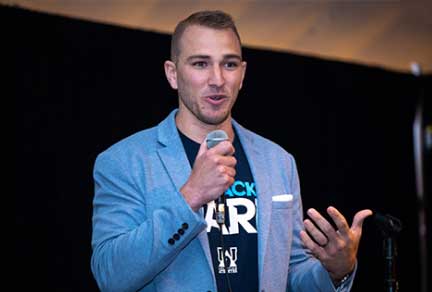
I recently talked through specific ways to foster early-stage success in this video: Bench-to-bedside: Transforming scientific breakthroughs into clinical success. In it, I urge biotechs to reconsider their approach to the bench-to-bedside journey, which begins not at IND application but years earlier in the lab. Mechanistic clarity, predictive models, and actionable biomarkers; cornerstone elements that provide translational impact throughout your development process.
Working with neuroscience biotechs, I have noticed seven key characteristics of successful programs:
- A clear human-relevant hypothesis. Your goal should be both measurable and highly specific. For example, hypothesizing that a product will normalize network function is too vague. Better to evaluate a specific change, such as frontostriatal connectivity.
- Embed biomarkers from day one. Stakeholders, including investors, want to see empirical evidence of progress. Even if your drug appears to be working, you can’t measure its effect without mechanism-linked biomarkers. For your best chance at earning funding, design programs that include biomarkers for target engagement or downstream effects.
- Smart adaptive trial designs. These might include seamless SAD/MAD studies, Bayesian approaches, or early-futility designs, all of which allow your biotech to be efficient with funding and respond nimbly to new data. Futility studies for Huntington’s disease drugs, for example, have been key in helping researchers focus on the most promising avenues of study. In another example, researchers studying status epilepticus used a Bayesian design to evaluate the comparative effectiveness of three treatments.
- Biologically enriched populations. Heterogeneity limits our chances of signal detection, as we saw in pre-2015 studies for Alzheimer’s disease — trials that generally enrolled any patient with AD, regardless of pathology. Even the most cutting-edge science can’t be clinically relevant unless tested in the right patient populations. In an example of success, researchers studying lecanemab focused on patients with biomarker-confirmed early-stage AD, dramatically increasing the study’s signal-to-noise ratio.
- Modern, objective endpoints. Using outdated rating scales to evaluate novel drugs will lead to missed signals. For instance, trials for depression drugs commonly use decades-old HAM-D or MADRS scales, which aren’t sufficiently sensitive to early pharmacodynamic effects, particularly in mechanistically novel agents. Endpoints like speech analytics and cognition biomarkers, however, provide researchers with valuable early data. Innovative developers are also capitalizing on real-world digital measures that detect micro-changes in affect, psychomotor function, or sleep architecture far earlier than clinician-administered scales. These include gait sensors in Parkinson’s disease, digital cognition in Alzheimer’s disease, EEG biomarkers in schizophrenia, and wearable sleep architecture for studies of insomnia therapies.
- Demonstrate operational readiness. Early programs often fail not because of biology but poor study execution. Studies can be doomed by variable assessments across sites, insufficient rater training, imaging center inconsistencies, or complicated biomarker logistics, among other factors. To earn investor confidence, demonstrate a solid plan for managing sites, logistics, and data.
- A clear path to partnering. Biotech investors fund inflection points, not endpoints. Determine what evidence will constitute proof of mechanism and proof of concept and make it clear when those milestones are likely to be reached. You’ll also want to plan for scaling your endpoints in later phases.
Biotechs often benefit from partnering with a neurology-specialized CRO partner. The right CRO serves not simply as a vendor, but as a strategic integrator helping sponsors de-risk development and accelerate decision making. In an increasingly complex landscape, our neuroscience team specializes in providing:
- Comprehensive translational strategy that addresses drug mechanism, biomarkers, endpoints, ideal study design, and regulatory considerations.
- Access to CNS‑specialized global site networks, which can expedite patient recruitment and ensure high-quality data collection, thanks to experienced staff. Network specialization is especially important for drug trials for Parkinson’s disease, Alzheimer’s disease, rare genetic disorders, neuromuscular diseases, schizophrenia, and depression.
- Regulatory expertise to help biotechs avoid pitfalls that have bogged down hundreds of prior INDs.
- Integrated evidence platforms that centralize data capture and review for rapid iteration. These platforms can integrate digital biomarkers, lab biomarkers, imaging, clinical data, and more.
- Increased credibility among investors and partners. Stakeholders trust a program backed by experience to be executable and ready for due diligence evaluation.
Neuroscience is incredibly challenging, but when a therapy works, it profoundly transforms lives. Your early decisions — about biology, biomarkers, population, endpoints, and operational strategy — determine whether a scientific idea becomes an approved treatment. The experts at Parexel can help you move forward with clarity, rigor, and confidence.
Related Insights
CTB Podcast
Leading Neuroscience Innovation: A Biotech CEO Playbook with Neil Warma
Oct 5, 2026
CTB Blog
EMA’s new pre-submission interactions model pilot: A fundamental shift toward submission readiness and predictable reviews
Sep 30, 2026
CTB Blog
Engage early, design once: turning early-phase trials into a program strategy
Sep 10, 2026
CTB Podcast
Biotech’s Next Era: Data, AI and the Future of Decision-Making with Jay Roberts
Aug 28, 2026
CTB Blog
Five Practical Strategies for Accelerating Early Phase Studies
Aug 19, 2026
CTB Webinar
Rethinking Phase I: Five strategies for faster proof of concept
Aug 4, 2026
CTB Podcast
A Journey through Academia, Big Pharma and Biotech: Building Breakthrough Medicines with Dr. Briggs Morrison
Aug 3, 2026
CTB Blog
Leveraging early-phase ethnobridging to reduce drug lag in China and Japan
Jul 15, 2026
CTB Blog
Modeling & simulation and artificial intelligence for early drug development
Jul 14, 2026
CTB Podcast
Overcoming Hurdles in Rare Disease Therapy with Reenie McCarthy
Jul 6, 2026
CTB Blog
Modernizing data operations to enable today's Phase 1 trials
Jul 1, 2026
CTB Blog
In early phase trials, operations is where speed is won or lost
Jun 28, 2026
Related Insights
CTB Podcast
Leading Neuroscience Innovation: A Biotech CEO Playbook with Neil Warma
Oct 5, 2026
CTB Blog
EMA’s new pre-submission interactions model pilot: A fundamental shift toward submission readiness and predictable reviews
Sep 30, 2026
CTB Blog
Engage early, design once: turning early-phase trials into a program strategy
Sep 10, 2026
CTB Podcast
Biotech’s Next Era: Data, AI and the Future of Decision-Making with Jay Roberts
Aug 28, 2026
CTB Blog
Five Practical Strategies for Accelerating Early Phase Studies
Aug 19, 2026
CTB Webinar
Rethinking Phase I: Five strategies for faster proof of concept
Aug 4, 2026
CTB Podcast
A Journey through Academia, Big Pharma and Biotech: Building Breakthrough Medicines with Dr. Briggs Morrison
Aug 3, 2026
CTB Blog
Leveraging early-phase ethnobridging to reduce drug lag in China and Japan
Jul 15, 2026
CTB Blog
Modeling & simulation and artificial intelligence for early drug development
Jul 14, 2026
CTB Podcast
Overcoming Hurdles in Rare Disease Therapy with Reenie McCarthy
Jul 6, 2026
CTB Blog
Modernizing data operations to enable today's Phase 1 trials
Jul 1, 2026
CTB Blog
In early phase trials, operations is where speed is won or lost
Jun 28, 2026