
Greater empathy, greater efficiency: How patient-first clinical development benefits all of us
The goal of all clinical research is to deliver critical therapies to the people who need them. Unfortunately, the way we design and operationalize clinical trials often creates burdens for those same patients. For example, a study in Therapeutic Innovation & Regulatory Science found that 17.8% of total phase 2 and 16.2% of total phase 3 procedures were non-core procedures. Further, as much as 30% of participant and site burden is associated with procedures that are either non-core or are non-essential procedures that support core endpoints.1 This represents an enormous and potentially unnecessary physical and psychological strain on patients, and it’s up to sponsors and CROs to change that. But to alleviate the burden, we need to first understand it from the perspective of a participant. And we do that by inviting patients into our process.
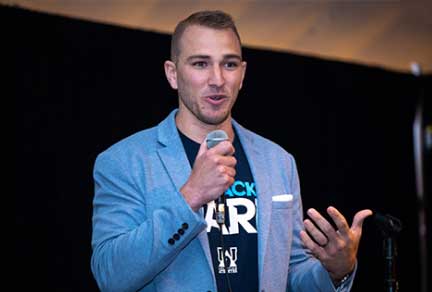
As Parexel’s Chief Patient Officer, one of my most important responsibilities is ensuring that patients and their care partners have a voice in every study we plan and conduct. It’s the only way we can fully appreciate the human impact of our clinical trial designs. Patient preferences need to inform our approach from start to finish.
So at every stage, we should be guided by one question: How will this impact patients? We won’t know the answer until we make bringing patients to the table a standard in clinical development and embed their perspectives into our decision-making processes. Doing so requires structural change within an organization — for example, putting a patient advocate in a leadership role like Parexel did. I’m empowered to elevate patient perspectives across the organization, reminding all of us that everything we do is in service of patients — and that patients deserve to have input into that work.
It’s no small undertaking, but when we allow patients to help shape our decisions, we make clinical research more accessible and that is a win for all. The downstream impact is that it improves our operational performance because study designs become more feasible to execute, faster to recruit for, and easier for participants to remain enrolled in.
The competitive advantage of a patient-first approach
Patients are our partners and need to be recognized as such by all stakeholders. Without them, clinical research can’t happen and so we owe it to them to prioritize their needs. This can include:
- Soliciting patient input on proposed protocols, including required patient activities and other potential hurdles, then adjusting the plan as needed.
- Selecting endpoints that are meaningful to patients — health outcomes that will notably improve people’s daily lives.
- Developing informed consent documents and educational materials with language that is clear and easy to understand.
- Using patient feedback to guide site selection, then training site staff in patient-first methods.
- Being transparent about how patient data will be used and allowing participants to see their own metrics via wearable devices or mobile apps.
- Collecting data on patient-reported outcomes (PROs) as part of the study so participants can explain in their own words how the investigational product impacted them.
- Communicating with patients during the study and after its conclusion so they know the value and importance of their contributions.
As we meet these obligations to patients, we make it easier for them to participate in research. As a collateral benefit, we also improve the operational efficiency of our development work.
That’s in part because patient-first studies require fewer amendments. Researchers have found that a substantial amendment has a median cost of $141,000 in phase 2 and $535,000 in phase 3.2 Amendments also have a significant cost in terms of time, with the average amendment implementation requiring 260 days.3 By asking patients early in the process whether a proposed protocol will meet their needs, we can address flaws before they become part of the clinical trial.
Patient-first clinical development also helps accelerate recruitment and improve retention. Recruitment for patient-first study designs is inherently easier because the protocol has been informed by the perspectives of the people who will participate in it. In practice, this might mean shorter or fewer visits, fewer procedures, options for decentralized participation, reduced logistical burden, travel assistance, or other accommodations. These accommodations also make it easier for patients to remain enrolled in studies. Drug developer Boehringer Ingelheim reports that, on average, their patient-informed study designs recruited participants 31% faster than designs that did not use patient input — reducing the recruitment period by more than 200 days.4 For studies with patient input, dropout rates were reduced by 46% compared to studies without input.5
Studies with efficient recruitment and good retention launch faster, cost less to conduct, and can result in stronger evidence packages. While studies with high dropout rates may receive increased scrutiny from regulators, high patient retention can positively impact data trustworthiness and result in value stories that will be compelling to payers — particularly if evidence packages include PROs.
In addition to allowing us to better serve patients, we’ve found that our patient-first culture unifies the Parexel team. By asking if our approach will work well for patients, we’re eliminating internal debates and delays. Choices about study design can be made more confidently and justified more clearly. So when a study includes burden-reducing approaches like virtual visits or simplified consent forms, our entire team understands why and can help scale these efforts quickly. And keeping our collective purpose at the forefront of our work has strengthened morale as well. Over the last few years, as we’ve furthered our commitment to patient-first clinical development, we’ve seen a positive impact on employee satisfaction, which we think is reflected in our excellent staff retention rate: 90% in 2025.6 All of this makes us a more effective partner to sponsors and lets us bring additional value to our collaborations.
Engagement from the outset
Patient engagement isn’t a checkbox activity or a rescue attempt when recruitment is lagging. Rather, it’s a philosophy that should underpin every study strategy. That means engagement needs to be consistent and intentional.
Practically speaking, what does this look like? At Parexel, we embed the patient perspective into the full development lifecycle, in part, through relationships with more than 120 patient advocacy groups across the world. We’ve also established internal and external Patient Advisory Councils — another way to learn directly from patients and their care partners, including our own team members. And we’re building all of these relationships on long-term shared goals, not short-term study recruitment needs.
We’re committed to fostering a patient-first culture across our organization because it reminds all of us, regardless of specific role, of the responsibility we have to the people who participate in clinical trials. We kick off every company-wide town hall meeting with a patient story that reaffirms our mission. I also regularly host Patient-First Fridays, which are streamed to our entire organization. These feature discussions with Parexel leaders and patient advocates who share about the personal impacts of clinical development. My colleagues have told me that it’s both humbling and energizing to hear from the real people behind every protocol — patients and care partners who are waiting for answers and treatments.
When we better understand patients’ specific experiences, our work can be grounded in humanity, not just process. Clinical trials aren’t laboratory experiments. In planning them, we have to consider the real lives — and real burdens — of the people who will participate and join us in our work. A leader at a sponsor organization told me after a recent project that we helped her see how patient engagement and clinical trial performance are inherently connected. And the benefits extend beyond study operations. So we have an ethical mandate to include patients in our clinical development process. But we also have a growing business case for it. It’s greater empathy that results in greater efficiency so we can deliver critical therapies faster to the people who need them.
Resources
- Getz K, Botto E, Arques AC, et al. Insights Informing Strategies for Optimizing the Collection of Clinical Trial Data. Ther Innov Regul Sci. 2026;60(2):563-574. doi:10.1007/s43441-025-00899-4
- Getz KA, Stergiopoulos S, Short M, et al. The Impact of Protocol Amendments on Clinical Trial Performance and Cost. Ther Innov Regul Sci. 2016;50(4):436-441. doi:10.1177/2168479016632271
- Getz K, Smith Z, Botto E, Murphy E, Dauchy A. New Benchmarks on Protocol Amendment Practices, Trends and their Impact on Clinical Trial Performance. Ther Innov Regul Sci. 2024;58(3):539-548. doi:10.1007/s43441-024-00622-9
- Kallsen K, Falcous J, Gilbert A. How Systematic Early Patient Input Delivers Measurable Value in Clinical Trial Design and Execution. DIA Global Forum. Published July 1, 2026. Accessed September 3, 2026. https://globalforum.diaglobal.org/issue/june-july-2026/from-assumptions-to-evidence-how-systematic-early-patient-input-delivers-measurable-value-in-clinical-trial-design-and-execution/
- Ibid.
- 2025 Sustainability and Impact Report. Parexel. Accessed September 3, 2026. https://www.parexel.com/application/files/3417/7809/3169/PXL_2025_Sustainability_and_Impact_Report_050626_FINAL.pdf
Related Insights
Blog
Hope Interrupted: Why Even Short Gaps in Rare Disease Treatment Matter More Than We Think
Jun 23, 2026
CTB Blog
Modernizing data operations to enable today's Phase 1 trials
Jul 1, 2026
CTB Blog
In early phase trials, operations is where speed is won or lost
Jun 28, 2026
Article
Lessons from the Front Lines: Navigating the Operational Challenges of Next-Generation ADC Trials
Jun 26, 2026
Case Study
Case study: Achieving a 7-week study start-up in a first in human autoimmune study
Jun 23, 2026
Blog
A Deep Dive into the Genetic Therapies Bootcamp at the ACMG 2026 Annual Meeting
Jun 23, 2026
Article
Case Study: Turning urgency into progress—Advancing new hope in AML
Jun 4, 2026
Case Study
Case study: Speed meets excellence in global tuberculosis research
May 6, 2026
Blog
Three strategies to accelerate MASH trials in a competitive, rapidly shifting market
Apr 30, 2026
Playbook
Designing clinical development programs for radiopharmaceutical therapies
Mar 11, 2026
Blog
Slowing down to speed up: optimizing country and site selection in atopic dermatitis trials
Dec 30, 2025
Blog
Do we still need broad patient representation in breast cancer trials? Absolutely.
Oct 17, 2025
Related Insights
Blog
Hope Interrupted: Why Even Short Gaps in Rare Disease Treatment Matter More Than We Think
Jun 23, 2026
CTB Blog
Modernizing data operations to enable today's Phase 1 trials
Jul 1, 2026
CTB Blog
In early phase trials, operations is where speed is won or lost
Jun 28, 2026
Article
Lessons from the Front Lines: Navigating the Operational Challenges of Next-Generation ADC Trials
Jun 26, 2026
Case Study
Case study: Achieving a 7-week study start-up in a first in human autoimmune study
Jun 23, 2026
Blog
A Deep Dive into the Genetic Therapies Bootcamp at the ACMG 2026 Annual Meeting
Jun 23, 2026
Article
Case Study: Turning urgency into progress—Advancing new hope in AML
Jun 4, 2026
Case Study
Case study: Speed meets excellence in global tuberculosis research
May 6, 2026
Blog
Three strategies to accelerate MASH trials in a competitive, rapidly shifting market
Apr 30, 2026
Playbook
Designing clinical development programs for radiopharmaceutical therapies
Mar 11, 2026
Blog
Slowing down to speed up: optimizing country and site selection in atopic dermatitis trials
Dec 30, 2025
Blog
Do we still need broad patient representation in breast cancer trials? Absolutely.
Oct 17, 2025